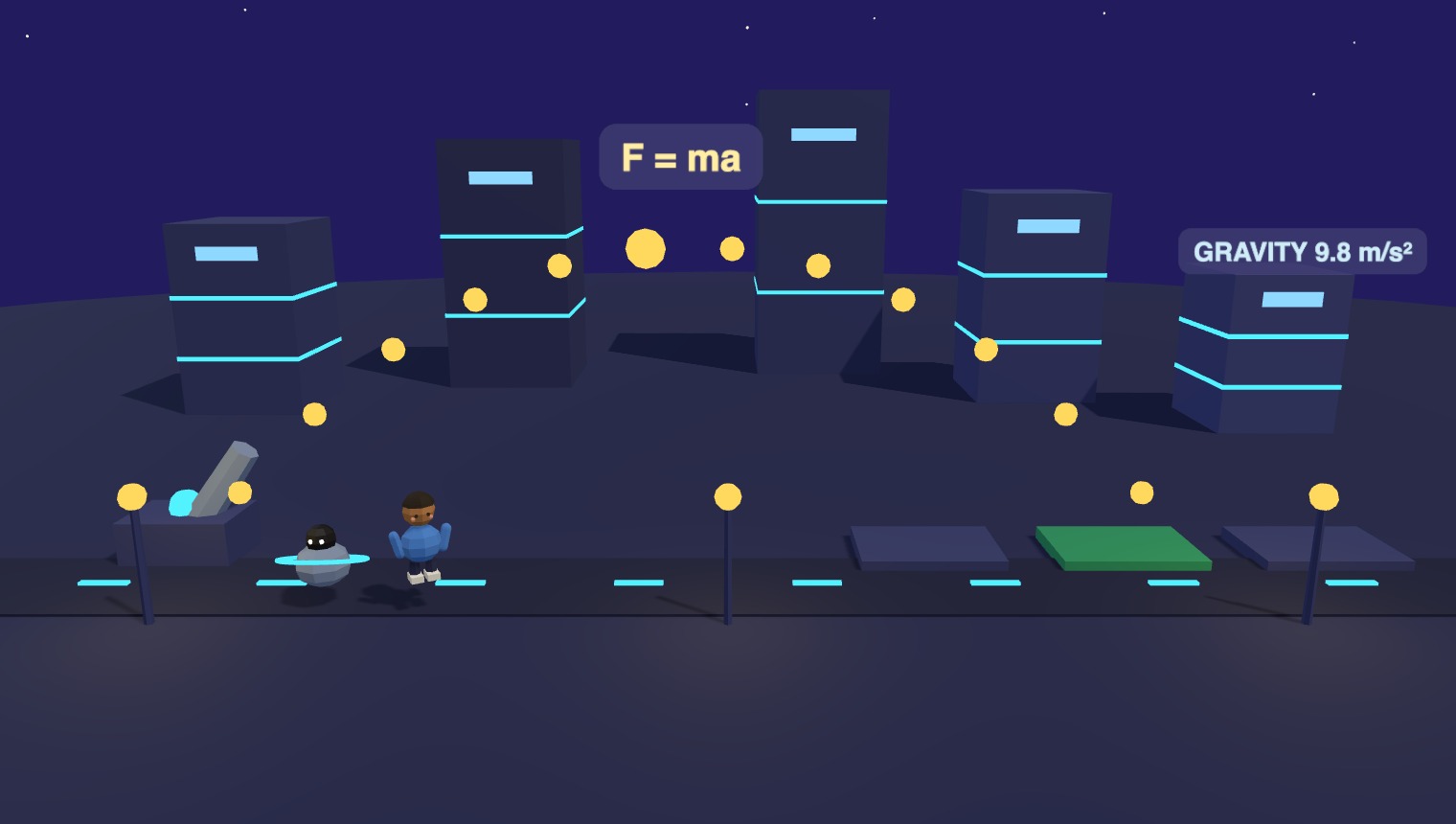
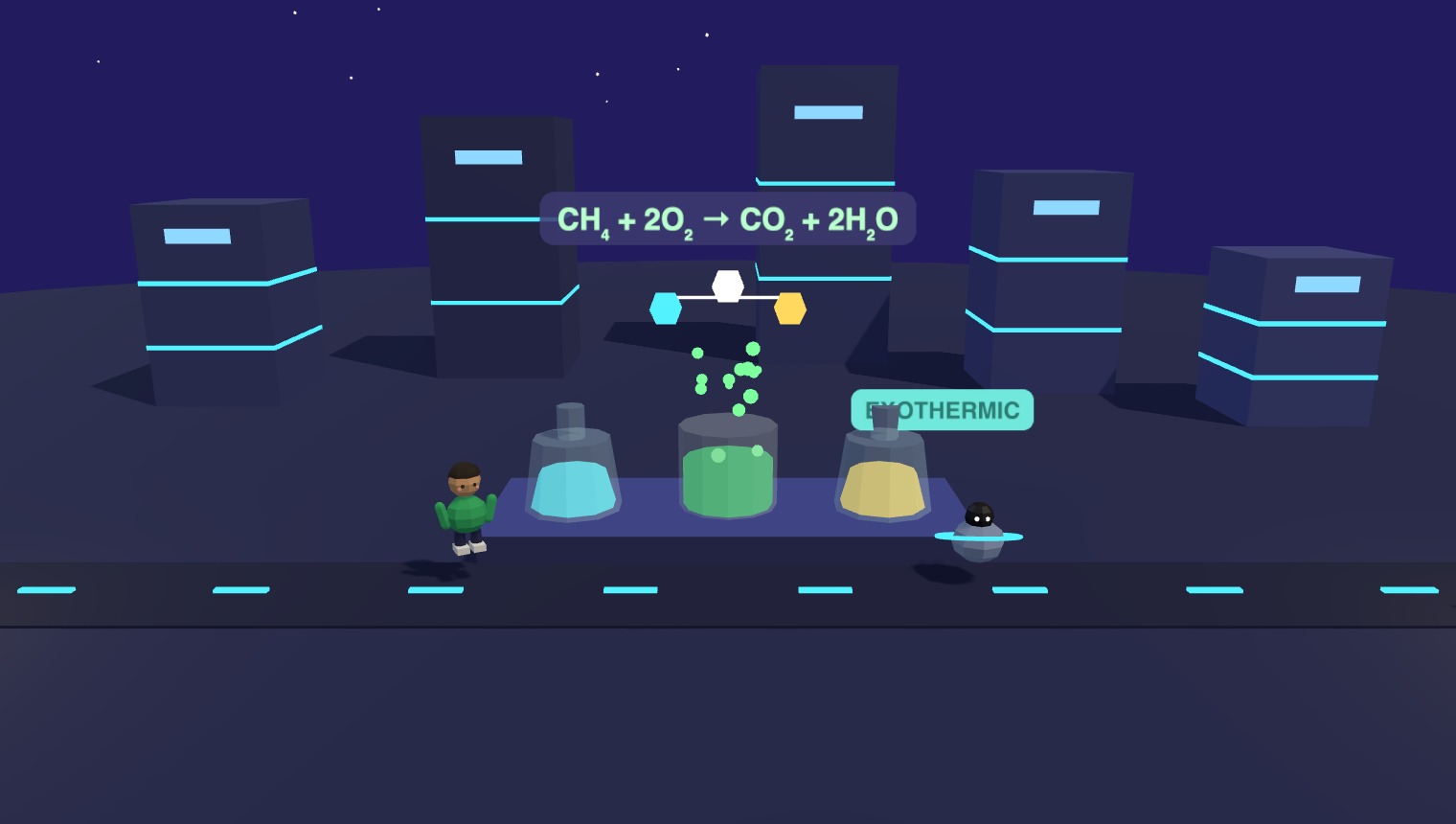
Playgrounds are the interactive heart of Axis – real, manipulable 3D worlds where students set the variables and physics answers back. Drag the mass, crank the gravity, tilt the ramp, mix the reactants. Nothing is a canned animation. Everything responds.
A Playground hands the controls to the student. They choose the setup, dial in the numbers, make a prediction, then run it and see whether the world agrees. Walk through one:
The controls change but the idea holds: pick variables, run it, watch the world answer. Mix an acid and a base and see the reaction rate climb – no goggles, no fume hood, no spill to mop up when it goes wrong.

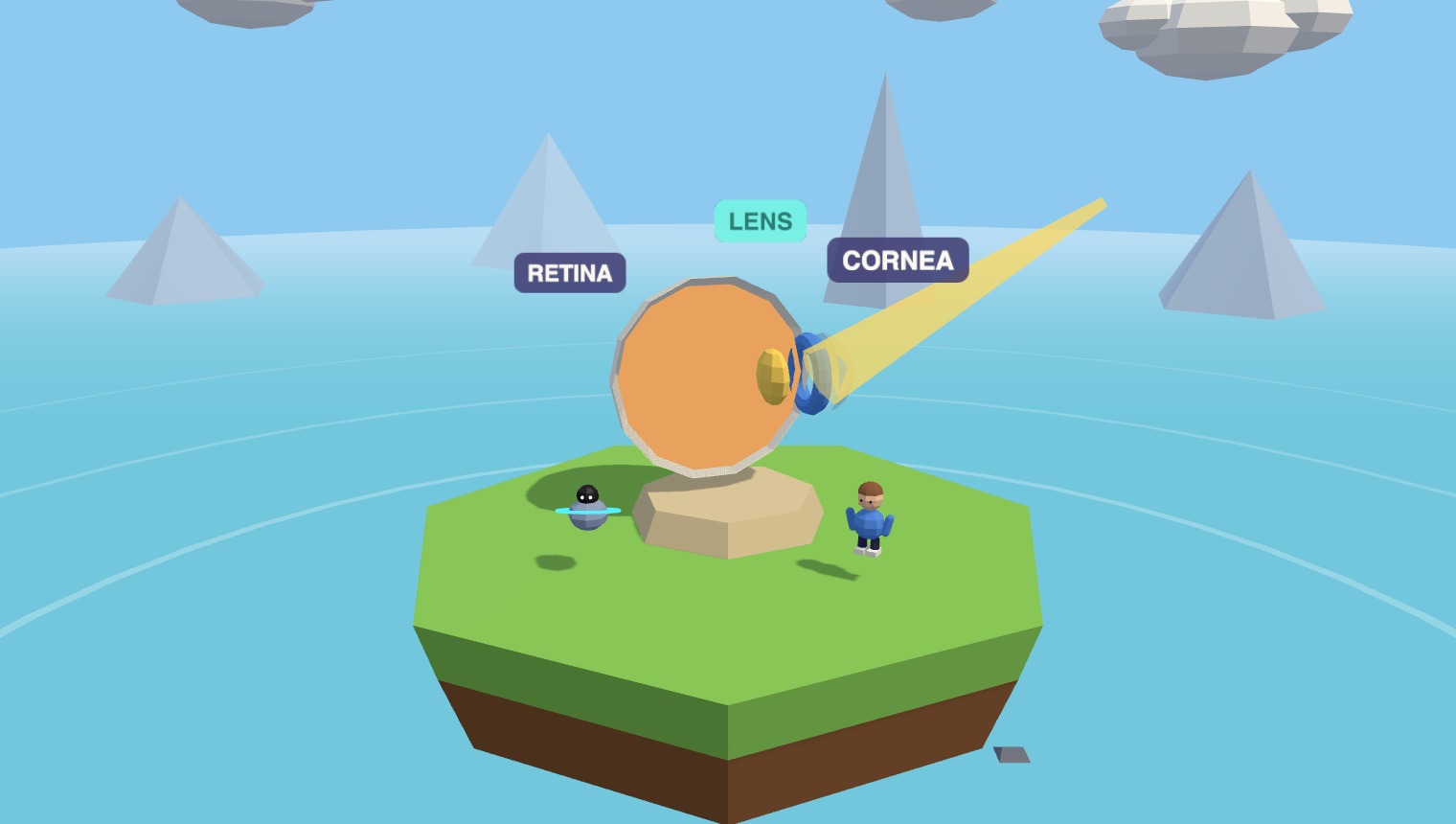
Shrink to the size of a photon and travel through the eye. Turn gravity off. Speed up a decade of erosion into ten seconds. A Playground runs the demonstrations that are too small, too slow, too dangerous, or flat-out impossible in a school lab.

Every dial and slider drives the actual simulation. Change an input and the whole world recomputes – no pre-baked clip playing back the same way twice.
Blow it up, freeze it, overdose the reactants – then reset. Students explore the dangerous and the impossible without a single risk assessment.
Focus a generated eye, drive a live reaction, slide two tectonic plates past each other. If it can be modelled, it can be a Playground.
Open a live Axis playground, set the variables, and watch the world answer – exactly the way your students will. Then picture running it with your class.
A real simulation. The variables are live inputs – change the mass or gravity and the world recomputes the result. There's no fixed clip; every run reflects the settings the student chose.
They control it. Each student can set the dials, predict, run, and reset on their own device. Demonstrate one live at the front if you like, then turn them loose to explore.
It usually follows a Briefing that sets the theory, then hands off to a Checkpoint that tests what they just discovered – all in one world.
Yes. The settings they tried and the predictions they made flow to your dashboard, so you can spot the misconceptions a static demo would have hidden.